
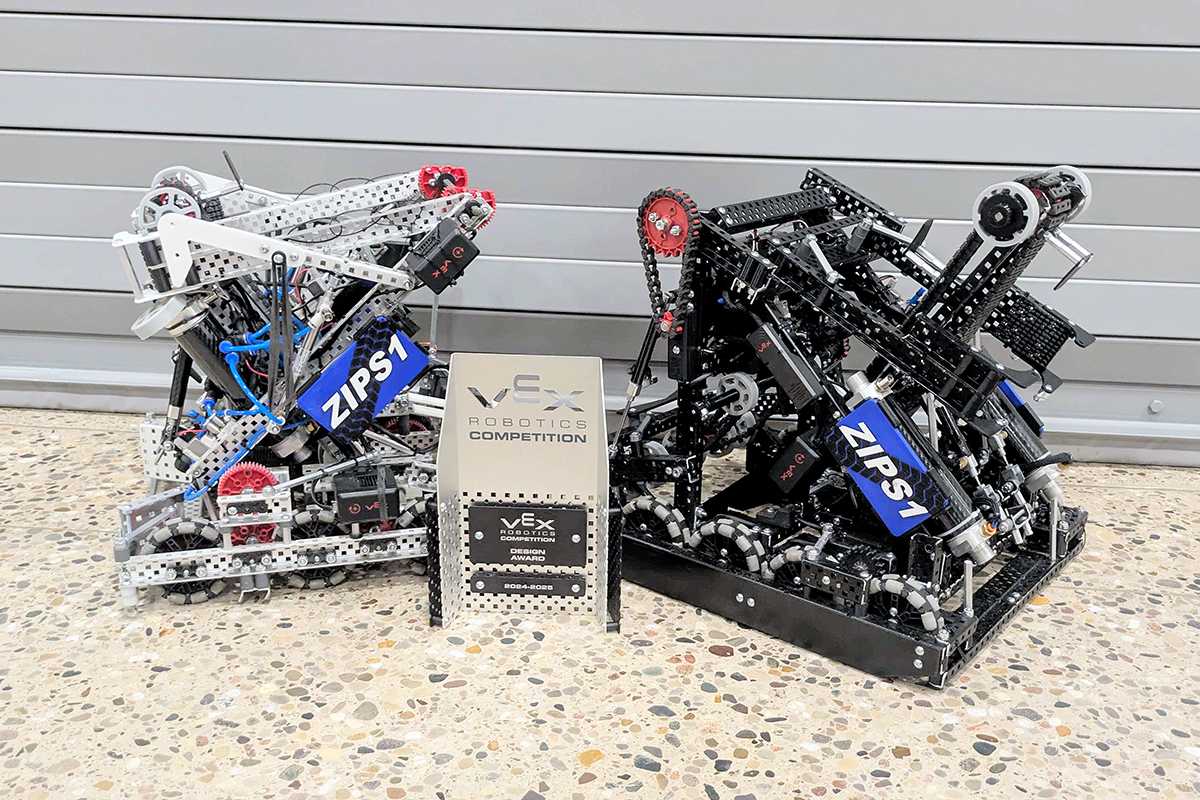
If you’ve ever heard the phrase “Fail fast, succeed faster,” then you already know the power of iteration. In VEX Robotics, you won’t get the perfect robot right off the bat. Instead, the key to success is testing, learning, and improving over and over again. It’s all about iteration, and here’s how this approach can turn your robot from a good idea into a competition-winning machine.
Test Early and Often Using Mock Matches
Building your robot is just the beginning. To truly understand how it will perform, you need to test it in the heat of action. Don’t wait until the night before the competition to see how your robot handles the pressure—test it often!
- Set up mock matches to simulate real competition conditions.
- Use these tests to see how your robot moves, reacts, and performs in different scenarios.
- Take notes on what works and what doesn’t, and tweak your design accordingly.
The more you test, the more you learn, and the better your robot gets.
Keep a Change Log in Your Engineering Notebook
In robotics, you’re constantly making tweaks, fixes, and adjustments. But how can you track everything? Simple: keep a change log in your engineering notebook.
- Document every adjustment, no matter how small.
- Include details like what you changed, why you changed it, and what the result was.
- This helps you track your progress and avoid repeating mistakes.
Your notebook isn’t just for the judges—it’s your roadmap to a robot that’s always improving.
Use Video Recordings to Analyze Robot Behavior
Sometimes, it’s hard to see exactly what’s going wrong when your robot isn’t performing as expected. That’s where video recordings come in handy.
- Record your mock matches or practice sessions from different angles.
- Watch the videos to analyze how your robot behaves during key moments.
- Look for patterns—like why your robot struggles to pick up objects or turns too slowly.
Seeing your robot in action from a new perspective can reveal issues you might have missed during live testing.
Redesign Based on Performance Data, Not Guesswork
Designing isn’t about guessing. It’s about using data to make informed decisions. After testing, make design changes based on what the performance data tells you, not just gut feelings or assumptions.
- Review the test results: What part of the robot consistently underperforms?
- Use this data to guide your redesign, focusing on improving specific problem areas.
- Avoid overhauling everything—small, targeted changes lead to more effective improvements.
By focusing on what the data tells you, you’re ensuring that your redesigns will actually improve your robot’s performance.
Final Thought
Perfection isn’t the goal—progress is. The real secret to winning in VEX Robotics isn’t getting everything right from the start; it’s the ability to test, learn, and improve in a cycle of continuous iteration. So, embrace the process, fail fast, and let each test take your robot one step closer to victory.


